Post Op Cooling: Neck Surgery Recovery Guide
Post Op Cooling: Neck Surgery Recovery Guide

When it comes to post op cooling, many people recovering from neck, spine, oral, or head procedures want a comfortable, hands-free way to manage heat and discomfort without ice sting or condensation drip. Dr.Chilly's reusable PCM neck ring freezes solid at 64.4°F, recharges in as little as 10 minutes, and rests around the neck without constant gel pack swapping or wet fabric. Always follow your surgeon's instructions about cooling, and ask before placing any device near an incision or dressing.
Why use a recovery ice ring after surgery?
Cold therapy ranks among the first discharge supplies a surgical team sends home with a patient. That package usually contains a wrap, a set of gel bags, and a quick reminder to ice the area. What gets left out is how awkward and inconvenient those traditional methods become during real recovery, especially for patients recovering from cervical spine, head, neck, or oral procedures.
What makes a recovery ice ring different from a standard ice pack?
A standard gel pack starts painfully cold and warms unevenly. Patients must remove it every 15 to 20 minutes to avoid frostbite or ice sting on sensitive post-surgical tissue. The constant on-off cycle interrupts rest and limits the total duration of cold therapy a person can tolerate. A post surgery cooling device like a recovery ice ring solves these problems by using a completely different mechanism.
A recovery ice ring relies on phase-change material that freezes solid at a steady 64.4°F. This temperature delivers consistent cooling after surgery without the freezing sting that ice packs produce. The ring stays dry, produces no condensation, and leaves no damp residue on incisions or dressings.
How does this compare to traditional gel packs?
Patients recovering from neck or back surgery already struggle with limited mobility. The table below shows why a wearable design matters.
| Feature | Standard Gel Pack | Recovery Ice Ring |
|---|---|---|
| Application method | Held or strapped to one spot | Worn hands-free around the neck |
| Temperature | Below freezing, requires breaks | Steady 64.4°F, safe for extended wear |
| Moisture | Condensation, wet dressings | Dry, no dripping |
| Recharge time | Several hours in freezer | As little as 10 minutes |
The design allows the ring to be worn for long stretches without the frostbite risk of an ice pack, as long as your care team agrees it is appropriate for you. There is no need to set a timer or remove the device when the cold becomes unbearable. The ring delivers steady cooling directly to the neck. Upper spine, areas that swell significantly after cervical or oral surgery.
Can a recovery ice ring help with heat discomfort in the first days at home?
It can help with the heat and discomfort side of recovery. A post surgery cooling device that holds a consistent, moderate temperature means less fiddling with gel packs that slip out of place or need to be swapped every few minutes. The ring stays in position when you are lying back or resting in a recliner, which makes it a practical comfort tool for the first days at home. Whether it is appropriate for you, and where it can safely sit, is a question for your surgeon, especially after neck, spine, thyroid, or oral procedures.

How does a post surgery cooling device help reduce swelling?
Swelling and discomfort tend to be at their worst in the first few days after surgery, which is why surgical teams so often mention cold therapy at discharge. It is important to be clear about what a phase-change ring is and is not. At a steady 64.4°F, the Dr.Chilly™ ring is a comfort cooling device: it is gentler than an ice pack and designed for long, dry wear, which makes it useful for the warm, flushed, uncomfortable feeling many people have while recovering. It is not a medical treatment and does not replace any icing, compression, or medication plan your surgeon has given you. If your surgeon wants true ice therapy at the surgical site, follow that advice, and ask whether a ring can be used alongside it for comfort.
What makes a recovery ice ring different from a standard gel pack?
A recovery ice ring uses phase-change material (PCM) that freezes solid at 64.4°F. Standard gel packs freeze at much lower temperatures, creating ice that stings the skin and forces patients to wrap towels between the pack and the incision. The PCM ring delivers consistent cooling without condensation, dripping, or the sting of ice packs. Whether and where it can be worn relative to dressings or incisions should always be confirmed with your care team first.
How does cooling after surgery work without interrupting rest?
Cooling after surgery with a neck ring keeps both hands free. The ring rests around the neck without straps or wraps that shift during sleep. Patients do not need to hold a pack in place or swap gel bags every 20 minutes. This continuous contact maintains steady cooling through the critical two-to-three-day swelling window without waking the patient to reapply.
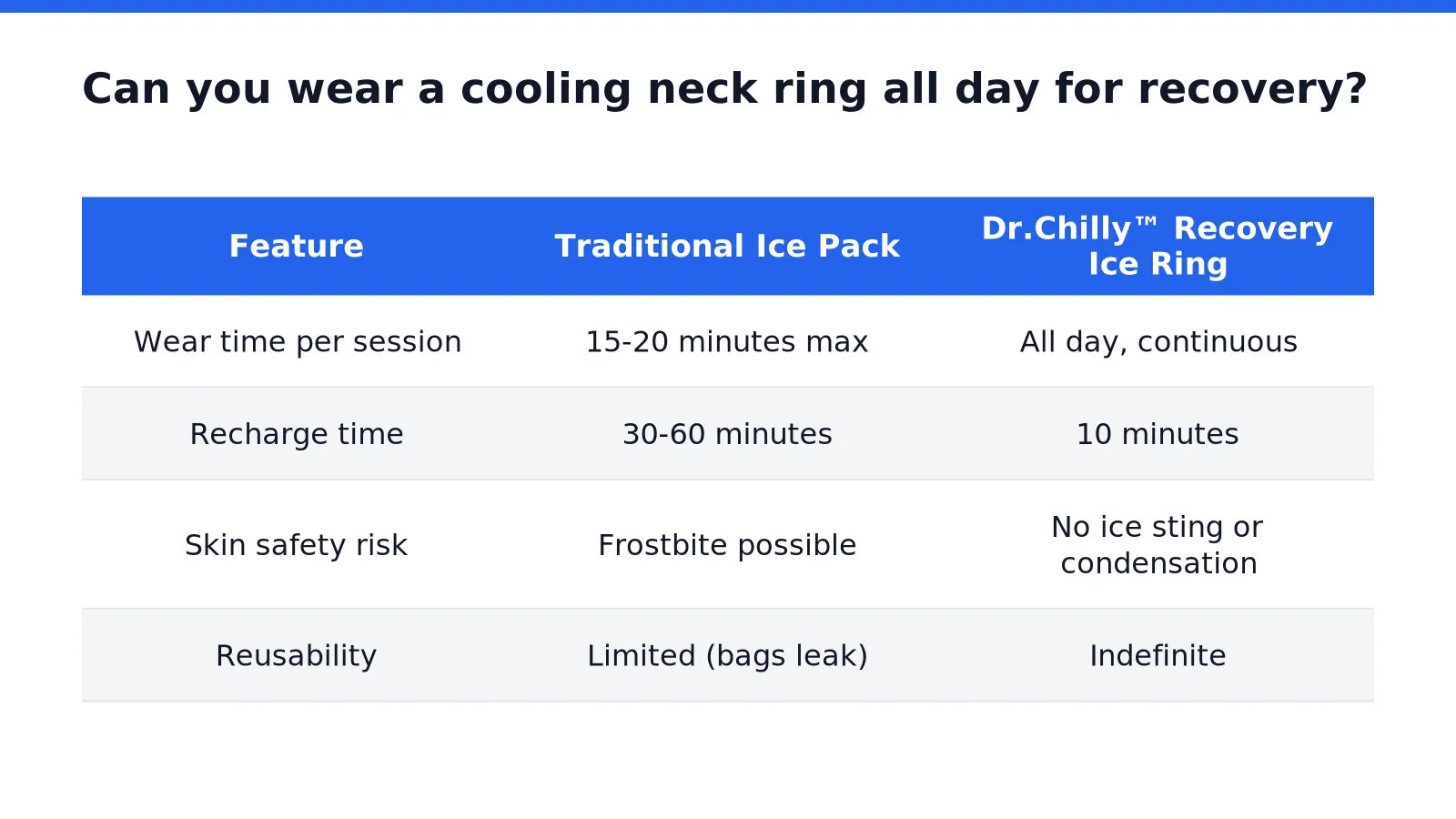
Can you wear a cooling neck ring all day for recovery?
A recovery ice ring designed with phase-change material (PCM) can be worn continuously throughout the day, unlike traditional ice packs that require removal every 15-20 minutes to prevent frostbite. The Dr.Chilly™ cooling neck ring freezes solid at 64.4°F, a temperature that delivers sustained cooling without the sting, condensation, or skin damage risk associated with standard gel packs. This makes it a practical post surgery cooling device for patients who need hours of relief without constant reapplication.
How does the recharge time compare to ice packs?
Standard gel packs often need 30-60 minutes in the freezer and then deliver intense cold for only 15-20 minutes before warming completely. The Dr.Chilly™ PCM ring recharges in as little as 10 minutes in a freezer, a fridge, ice water, or a cooler with ice. The ring is reusable indefinitely, meaning one device replaces dozens of disposable ice packs over the course of recovery.
What happens when the ring warms up?
When the PCM ring reaches room temperature, the patient simply places it back in the freezer for 10 minutes. For extended cooling after surgery sessions, the Thermal Chill Case keeps spare frozen rings cold for hours on the go. The case fits three rings, allowing a patient to rotate them throughout the day without waiting for a single unit to recharge.
| Feature | Traditional Ice Pack | Dr.Chilly™ Recovery Ice Ring |
|---|---|---|
| Wear time per session | 15-20 minutes max | All day, continuous |
| Recharge time | 30-60 minutes | 10 minutes |
| Skin safety risk | Frostbite possible | No ice sting or condensation |
| Reusability | Limited (bags leak) | Indefinite |
Patients who need to reduce swelling and heat discomfort after cervical spine, head, neck, or oral surgery benefit from a device that stays on without interruption. The PCM ring delivers dry, hands-free cooling that supports recovery without the hassle of constant ice pack swapping.
Does a cooling ring actually help during recovery, or is it just a gadget?
The honest answer is that it helps with a specific part of recovery, and it is better to be clear about which part. Recovery from surgery is uncomfortable in several ways at once, and one of them is simply feeling too warm: lying in bed under blankets, wearing compression or a collar, running a low-grade temperature, or sweating from medication or anxiety. A ring that holds a steady 64.4°F, stays dry, and stays put is well suited to that problem. It gives you a cool, constant contact point at the neck without forcing you to hold anything or keep checking a timer.
What it cannot do is replace medical advice. Every surgery is different, and the right cooling approach for a cervical fusion is not the same as for a thyroid operation or wisdom tooth removal. Treat the ring as a comfort tool that you use within the plan your surgeon gives you, not instead of it.
What questions should you ask your surgeon first?
- Is any kind of cooling at the neck or head okay while my incision heals?
- Is there a minimum distance I should keep from the incision or dressing?
- Should I keep using the prescribed ice or cold therapy as well?
- Are there any circulation, numbness, or sensitivity concerns that mean I should skip it?
How should you use it day to day?
If your care team gives the green light, a simple routine works best. Freeze a ring for about 10 minutes, wear it while resting, and swap in a fresh one when it softens. Keeping a spare in the Thermal Chill Case means a cold ring is always within reach, even on days when getting to the freezer is a chore. Stop using the ring and contact your care team if you notice increased pain, numbness, skin changes, or anything that does not feel right.
Who else benefits from a gentle cooling ring?
People who run warm for other reasons, such as hot flashes, heat sensitivity, or long days in hot workplaces, often use the same ring. You can read more in our guides on hot flash relief and on the ring's features and specifications.
If you are shopping for someone who is recovering, the 30-day money-back guarantee makes it a low-risk gift, and it can be returned if the care team says it is not suitable.
Conclusion
In closing, comfort cooling during recovery works best when it is gentle, dry, and easy to live with, and when it fits the plan your surgeon has given you. Dr.Chilly™'s reusable cooling neck ring delivers precisely that: dry, hands-free relief that adapts to your recovery timeline, recharges in minutes, and supports your healing journey day after day. When comfort and consistency matter most, innovative cooling technology makes all the difference.